Saturday, 23 January 2016

Perspective Matters: A Mini-Post

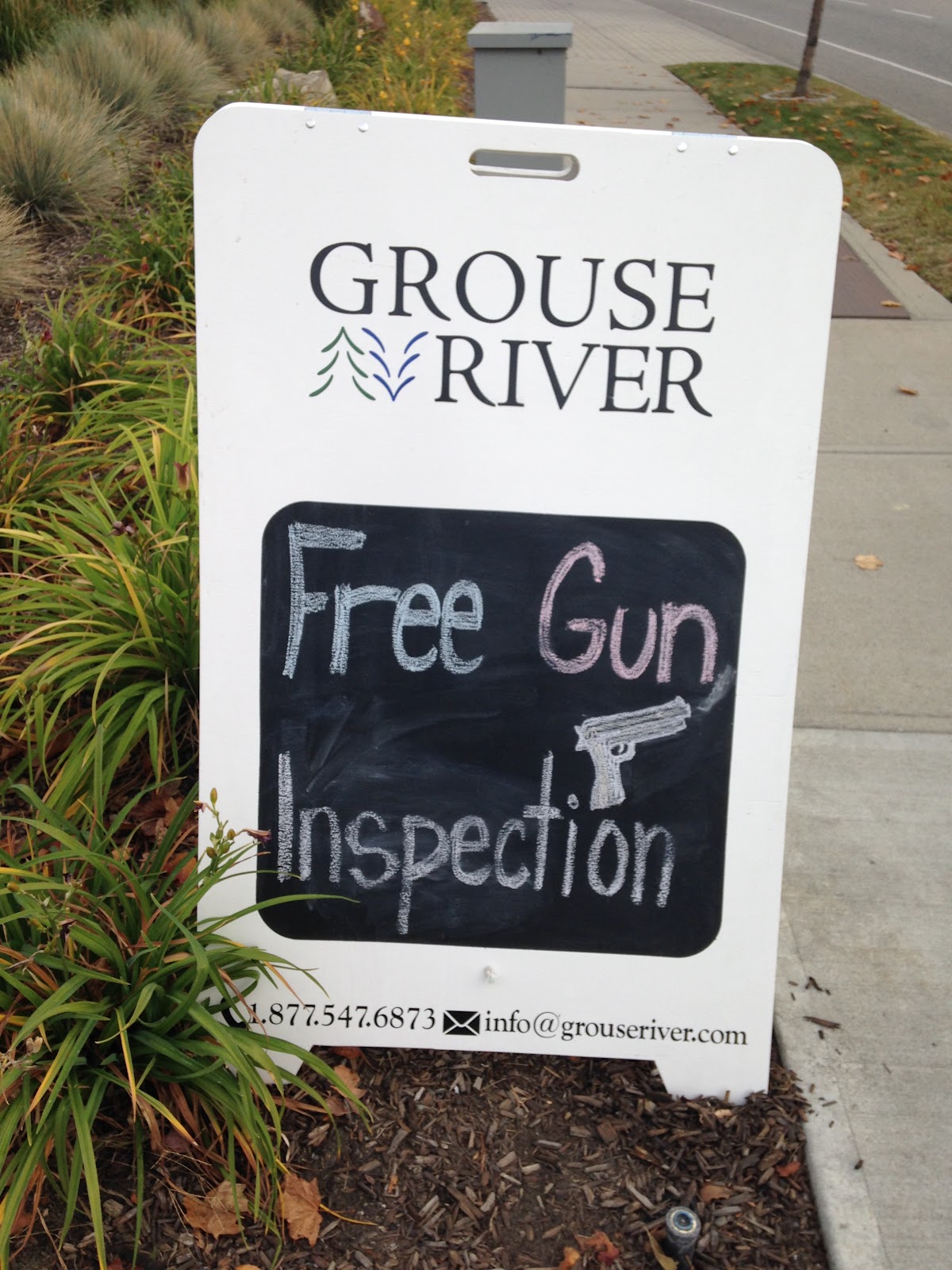
Check out this sign for a minute. What would you think if you saw it? Would you be surprised? Confused?


We actually came across this sign one day as we rounded a corner. At first, we could only see the one portion of it (the part shown above). We were both caught a little off guard and thought it was really strange. We kind of said “What?!?” We had to go back and have a second look. Then we laughed and realized that this is an example of how seeing the whole picture really makes a big difference! You’ll be able to see the whole sign at the bottom of this post, but first we want to share a few thoughts.

We all have moments in life where we have a tendency to hyper-focus on one aspect of a situation, but looking at the bigger picture can change everything. What does this have to do with reclaiming life from pain? A lot, actually. In the pain course we were at in October we all had to describe pain. One group described it as looking through a paper towel roll at life. Pain demands attention. It can be like losing your peripheral vision, or in other words, the ability to fully engage in other aspects of life.

This can happen whether you’re the person in pain, the supporter, or the health care provider.
  • As the person in pain, the other aspects of your life can get overshadowed by the pain.
  • As a supporter, you may find it difficult at times to keep your perspective on who the person really is. This is especially true when they are not acting like the person you know and love, and it can be difficult to understand what they are experiencing.
  • As a health care provider, it is easy to get ahead of your clients and give them an amazing plan with all the tools to succeed, then get frustrated that they aren’t following through. But if this happens, you may need to take a step back and look at the bigger picture. Keeping a holistic view leads to appropriate goals, which lead to recommendations that can effectively address the client’s needs.

If your situation makes about as much sense as the “free gun” sign, then maybe it’s time to shift your focus. We’re not trying to tell you to put on rose-coloured glasses, ignore reality, or expect a perspective change to be a magic cure. Basically, what we’re suggesting is: sometimes it’s worth re-examining your perspective and assumptions.

IMG_5689.JPG

Saturday, 16 January 2016

Back Pain: A Tale of Two ER Visits

Imagine this:

You are 25 years old. Your back has been hurting lately and it's been getting worse. You haven't seen your doctor about it yet. You've been pushing through it, popping over the counter painkillers, and hoping it'll get better. Then one day at work it suddenly gets a lot worse. The pain extends down your leg, and your leg gives out under you. You can't ignore this anymore. Your over the counter drugs aren't even touching the pain and you feel like you can't take it anymore. You call your partner, who drives you to the hospital. 

Now imagine you get into the emergency room and the nurse says "oh man, you must have a herniated disc" with a look of absolute pity. You wait a few hours to be seen by a resident doctor, who does an exam that you can only describe as excruciating. He says you need an MRI and tells the nurse to give you narcotics. The narcotics kick in and you finally fall asleep, leaving your partner to sit there wide awake wondering what's going on. A while later, another doctor comes in and does the same excruciating exam. Even with narcotics this one hurts. You try to tell them that the resident already did this, so please don't do it again, but the doctor proceeds anyway. You wait another few hours and get your MRI. Another doctor comes in and again examines you in the same, horribly painful way. This doctor says "it's definitely a severe herniated disc. This pain is never going to go away unless you have surgery. But the reality is there's way too many people with painful herniated discs. If a surgeon will even take you, it'll be at least a two year wait. If you had neurological symptoms, then you could get surgery right away. But since it's “only” pain, good luck. Here's a prescription for two days worth of narcotics. I can't give you any more because I don't know you, so I can't be sure you won't abuse or sell them. Follow up with your family doctor.” Later you call the family doctor, only to find out she's on vacation for three weeks, and the covering doctor does not prescribe narcotics. 

Can you imagine the feeling of absolute helplessness and frustration that you would feel? The key message you receive seems to be “your pain is here to stay, and we don't care.” 

Now imagine this version of the story:

When you get to the emergency room, the nurse reassures you. She tells you they have very good doctors here, and they'll be able to figure out a plan for how to deal with this. You wait a few hours to be seen by a resident doctor, who explains that he needs to do an exam to figure out whether there are any neurological symptoms accompanying your pain. The exam is painful for you, but he’s compassionate about it. After the exam, he tells you that the good news is he isn’t seeing any neurological deficits, and because of this he doesn't recommend advanced imaging, like an MRI. He explains that you could have a herniated disc. He also explains that research is now showing that a lot of people who have herniated discs don’t actually have any symptoms, and doing surgery on the people who are having pain is not necessarily helping them. Sometimes it even makes their pain worse. He does prescribe appropriate pain medication to help you get through this current bout of pain, but he also tells you that there are many strategies that can be used to better manage the pain, and medication is only a part of the answer. He tells you that the emergency room is great for dealing with medical emergencies, and it’s good you came here to rule out any neurological symptoms. But at this point, there are better places to further assess the cause of your pain and help you learn how to deal with it. He refers you to a pain specialist who can help you along the way and also advises you to follow up with your family doctor. He tells you to come back to the ER if you do develop neurological symptoms.

What do you think you might feel in this scenario, and what overall message would you receive this time?


Click to enlarge.


What are the differences?

In the first example the whole situation is the opposite of how we would like to see pain treated. There is no empathy or reassurance. The wording used only increases the threat value of the symptoms. (“Oh no, this is really bad!”) This can take a nervous system that’s already on high alert because of the sudden worsening pain and escalate the system’s response. It also does not provide any hope that things can change. (Which could be argued to add a whole new threat: this will NEVER go away!)

In our ideal situation the client is treated with caring, respect and compassion. Decisions are discussed with the client and education is provided. The overall approach hopefully made the client feel supported in a scary situation. 

Points to ponder:

We’ve packed a lot of concepts into these two short examples. These topics could be posts in themselves, but we just wanted to introduce the ideas here. We would love to hear your thoughts on them.

1.) Respecting the client - In the first example we saw three different doctors do the same painful exam three different times. We totally understand each doctor wanting to an assessment before they make decisions. But if a colleague just did the very same thing, you trust their judgement, and the assessment is very painful for the client...is it necessary? At this point what are you looking for with your assessment and is it a good reason/justification to put the client through the assessment? If it is necessary, explaining the benefits to to the client might put them at ease. 

2.) Language - As we mentioned above, the language clinicians use to describe the pain can either reassure or terrify the person in pain. Clinicians are often rushed, trying to see many people in a short time frame. However, in our example above, it really wouldn’t take any longer to communicate in the encouraging manner used in the second scenario.

3.) Imaging - Imaging for pain is a topic that is currently being researched and discussed. As Bronnie Thompson so succinctly stated “We know that most people with back pain are not going to benefit from having X-ray, CT or MRI because these images either don’t show anything useful (no image shows pain) or show something irrelevant that might look interesting but is actually unrelated to back pain. We know this, and there have been numerous treatment guidelines and algorithms and education indicating not to give imaging for low back pain without neurological changes” (Thompson, 2016).

4.) Surgery - Again this is a topic that is currently being researched and discussed. There are many articles on this topic, and some suggest that surgery has been “overprescribed” (Senelick, 2014).

5.) Pain Education -  Educating the client on their own condition can begin at any stage and with any health care provider. While there may not be time to address it in detail in the emergency room, it can be further explored with healthcare providers who specialize in pain. These could be physicians, occupational therapists, physical therapists, psychologists, physiatrists, pharmacists, or a team of providers working together.

And a parting thought:

The first scenario is based on a real story. We don’t share it as a criticism, but as a starting place for a discussion on how pain is approached in assessment and treatment. For health care providers, we hope to draw attention to the impact your information and language can have on clients and their outcomes. If you’ve happened to be the client or family in an ER visit that resembles the first one, please don’t give up. There are health care providers out there who are treating people with compassion, kindness, and care.  And there IS hope that your pain and your life can get better.


Acknowledgement: 
Diagram by Ashley and Colleen at Reclaiming Life. Graphics from Freepik.com.

References:
Senelick, 2 (2014). MRI Back Scans Do Not Predict if you Need Surgery. Retrieved from http://www.huffingtonpost.com/richard-c-senelick-md/sciatica-_b_4098475.html on January 16, 2016

Thompson, B. (2015). HealthSkills: How to Spend Money You Don’t Need To. Retrieved from https://healthskills.wordpress.com/2015/02/02/how-to-spend-money-you-dont-need-to/ on January 16, 2016

Saturday, 2 January 2016

A Year in Review


It seems like everywhere in blog-land reviews of 2015 and goals for 2016 are abundant. As 2015 is the first (half) year of our blog, we thought it would be fun to look back on our beginning.

Back in July we decided to start a blog, sat down, came up with a name and wrote our first post. Neither of us knew what to expect or where it would go, but we definitely had a lot to say on the topic - our list of ideas just kept growing and growing. 

For us the blog has been a journey. Writing some of these posts has brought tears. Others have challenged us both personally and professionally. We’ve learned a lot and read journal articles for “fun.” We’ve tried out some of the things we’re learning in our own lives. We’ve met some really great people, both online and in person. We get excited as we see our number of readers and our e-mail list grow. One of our first e-mails to each other went like this:

C: We’ve had 118 views on our blog. Do you think that was all us dealing with our formatting?
A: Well, I have a confession to make. I looked at it 118 times yesterday. (Totally joking)

But the cool news is it isn’t just us who is reading our blog. We’re excited to see all the locations our blog is reaching, and so grateful for the beautiful comments and questions we have received along the way. 

So, like any good blog review post, here’s a look back at some of the key points we’ve learned in 2015:

1.) It’s all about the nervous system. Well, we’ll admit, there are some other pieces in there. But we’ve come to realize that any helpful approach to pain management needs to take the nervous system into consideration. We’ve also realized just how much this is NOT discussed in conventional pain management. 

2.) Pain asks to be respected. There will be more on this topic in the future. Pain is, at the very basic level, an alarm. Ignoring it can lead to your body sounding the alarm louder. 

3.) There is lots of amazing information out there. And lots of people who are super excited about pain management and doing really cool research and clinical work.

4.) There are many tools that can help individuals take back some control of their lives. These tools can include: energy conservation, pacing, and planning. We’ve both had some very cool “reclaiming” moments in our own lives this past year. 

5.) There are people who are “pain superstars” and we can all learn from each other. In fact, everyone has their own superstar moments. 

6.) Sometimes pain doesn’t need to be viewed as the enemy or something that needs to be overcome or beaten. Sometimes a gentler approach is what is needed. We love Bronnie Thompson’s use of the term “flexible persistence.” 

So what’s next for our blog? Well, that picture is still forming. We have lots of ideas and topics we want to explore. This includes things that we’ve discussed lately but also questions that we’ve been asked by our readers. Please feel free to continue sharing your thoughts, experiences, insights, and questions. We love receiving your e-mails and comments! The ideas around pain management are expanding and changing at the moment. We really want to learn all we can and share this information with you in the coming year. While we don’t know exactly what 2016 will look like for our blog, we’re excited to see where it goes. We hope it’s full of lots of interesting, useful posts and over time becomes a place of encouragement, information and celebration of successes.


Friday, 25 December 2015

Saturday, 5 December 2015

Spa or Bootcamp: A Case For Considering the Nervous System in Pain management

Once upon a time there were two ladies who had fallen and ended up with a neck injury. Both had visited the ER and were sent home with a brace. One of the ladies was super relaxed about the whole thing and was somehow okay with what had happened. The other one was still in a bit of shock about the fall and completely wound up. Even just a gentle touch made her jump and scream like she had been hit. 

What was the difference between these two individuals? Mainly it was the state of their nervous systems. One had processed the fall, her injury, and was ready to get better. (How she did that so fast is amazing!) The other lady’s nervous system was still on guard, ready to pounce on anything that might be a threat. 

So the question today is: How effective is therapy when the nervous system is so wound up? It’s pretty hard to do effective therapy if you can’t even touch the person!

One popular pain center described their program as a balance between a spa and a boot camp. You mostly saw the boot camp part in the gym; they would encourage people to push harder, keep going when they were tired, etc.  And yes, their clients did see improvement...muscles were strengthened or stretched, there were increases in people’s endurance and the amount they could lift. Progress on charts. But looking at that program we just wondered, how much more progress could have been made if they emphasized the spa part too. If they took the time to lower people's nervous system response, and didn’t add to it by the “bootcamp” approach. What would have happened?

Our guess is that they would have seen longer term, sustainable changes. From what we’ve seen, pain and all that comes with it throws a huge amount of stress on our systems. Calming the nervous system down (so that it is not constantly on edge), opens the door for you to really benefit from any other therapy. This gives you a chance to integrate it, learn from it and move towards healing. 

So, how can we do this? Well, there are many ways therapists can help to bring the nervous system back to a more balanced state. Here are just a few ideas:
  • Calm the nervous system through “relaxation” methods: visualization, acupuncture,  breathing exercises, yoga, laughter, massage, etc
  • Create a relationship of trust with your client and validate their experiences. They don’t have to “prove” their pain, it’s just accepted.
  • Reduce disability. Enabling your clients to do the things the need to do (teaching them a different way, changing the situation, etc) reduces the impact of the pain on their lives and in turn reduces the stress it places on their body.
  • Address client's fears. Listen, educate, and try to come up with a solution. There are about a zillion new worries that come with pain and even acknowledging them can take some of the pressure off the body.
  • Give your clients permission to rest. Often people in pain feel the need to keep pushing, which again adds more stress to the body.


If you’re a therapist we would love to hear what you do with your clients. What do you find works, and what doesn’t? If you have pain, what has worked for you? What are your thoughts? 

You might have noticed on this blog we talk a lot about the nervous system. Well, this is why. We believe the process of  learning to live well with pain can be only be enhanced by calming the nervous system. 

It’s kind of funny that this little post about the “spa vs bootcamp” concept has been hanging out with our draft posts since the beginning. It asked a lot of questions, provided some speculation based on experience, but didn’t provide a lot of answers as to why the boot-camp approach wasn't enough. And then we went to a course that talked all about pain and the nervous system. Lightbulbs went off! In the new year we’ll carry on this discussion and talk a bit more about how the nervous system relates to pain and why it is so important to acknowledge this connection.

Acknowledgements:
Weightlifter silhouette from freepik.com

Sunday, 29 November 2015

The Importance of Self-Efficacy: A Mini-Post

Hello, and welcome to our second mini-post. We don't have a post to share every week, so we thought we would try sharing some mini-posts on the "in between" weeks. Today we have a quote to share with you. 


"I am not afraid of Storms, for I am learning how to sail my ship." ~ Louisa May Alcott

One comment we've heard from many people in pain (an echoed in the literature) is the loss of control. The feeling that pain is making the decisions in life. Paying attention to self-efficacy (and looking for ways to foster it) is so important because it can help us regain that sense of power and control. Knowing that pain isn't making ALL the decisions in our lives can have a huge impact on both the experience of pain and on quality of life. 

Tuesday, 17 November 2015

The Torn Blanket: How Pain Can Challenge Our Sense of Security


Recently I (Colleen) listened to an interview of Bill Moyers with Pema Chodron. In it they talk about security and the impact of challenging situations. When these situations arise, they can affect the parts of our lives that we see as stabilizing, the things that we use to create our sense of "ground." They discussed what happens when life removes this security and how we react to that sense of "groundlessness." 

This lead to a discussion about our reaction to pain becoming part of our lives. (That's what happens when you write a blog with your friend!) 

We think in many cases chronic pain forces us to examine the whole idea of security. For many people our grown-up “security blanket” includes our idea of health and our bodies’ capabilities. Our health is also inter-woven with other pieces of this blanket, like being able to provide for a family, do a certain job, or other parts how we define ourselves. The pieces that make up the blanket are different for everyone and depend a lot on individual beliefs and values.

When chronic pain (or disease) enters the picture it can change all this. It comes along and tears some pretty big holes in this nice secure blanket.  This can be a scary place and a frustrating place. For some it can be a place of loss, for others a place of anger, or possibly confusion.  All sorts of reactions can happen, and they can change over time. The parts that are torn and what parts are left will be different for every situation, and it is important to look at both parts.

So what do you do when you’re left holding a shredded blanket and looking at the gaps? We think that depends on individual beliefs and situations and the way each person handles obstacles in their life. We can't give you a one-size-fits-all action plan (as much as we would love to), but we can give you some things to think about

1. Be kind to yourself: This doesn't mean booking a $10,000 trip to your dream destination. It's more about treating yourself with kindness. Somebody once asked me (Colleen) to pretend it had been a friend in the accident, and to picture saying the things to her that I say to myself. I just started laughing and said "I would never say that!" It was a lesson that stuck - if I wouldn't say it to a friend, why is it okay to say to myself? 

2. Recognize the losses and allow yourself permission to grieve. It really is okay to not be okay sometimes. It's okay to be sad, frustrated, angry, confused or crying. Acknowledging the losses doesn’t mean you are weak or unappreciative of the good things in life. In fact we think it takes a lot of courage to really stop and acknowledge what has changed. Allowing yourself to recognize that the changes in your life are significant is  a huge part of creating the space to carry on. Try to find a balance - acknowledge the loss, but don't get stuck there.

3. Focus on the pieces that are still there. We know, we know, we can hear the groans through the computer. This isn't just one of those "glass half full" trivial comments people make. We realize this is so easy to say but not easy to do. We realize that sometimes it looks like the glass is totally empty and there isn't even a drop left. Even if there are big gaping holes in the blanket, there will also be pieces that are still whole. Look for these pieces, they might be hidden or frayed but they're still there. Celebrate them. 

4. Learn to live with the holes and adjust your expectations.  By keeping your standard bar at the same level it was when you were “better,” everything you do now could look like a failure in comparison. When really that’s not the case at all! By thinking this way, you are limiting yourself from recognizing successes in the present. It`s a fine balance between accepting the now and still leaving room for increased functioning, coping, and healing. 

When all you can think about is making it through the day, it’s tough. But do yourself (or your clients) a favour, and focus on one tiny change at a time. You may feel like your security blanket is gone, but it will come back. It will look different than it once did, but it will still be beautiful.

Acknowledgement

Thank-you to all the people who have shared their stories and wisdom with us.

If you're interested here is the link to the interview: 
http://pemachodronfoundation.org/videos/bill-moyers-on-faith-and-reason-with-pema-chodron/